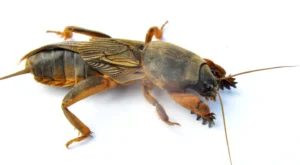
When exploring your backyard, have you ever come across a long brown insect with beady black eyes and massive shovel-like front legs? This strange creature, which lives most of its life underground, is a mole cricket.
Mole crickets aren’t true crickets—or moles. Though they share the same scientific order as crickets and grasshoppers, mole crickets make up their own unique family of insects called Gryllotalpidae. There are over 100 species, with new ones still being discovered.
These insects are natural burrowers. All mole crickets were created to have large front legs ending in broad paddles with clawed edges. Their legs are perfectly designed for digging, and mole crickets will spend most of their lives underground. They will dig long tunnel systems close to the ground where there is a lot of plant life, using the tunnels to expose tender plant roots to eat.
While all mole crickets are technically omnivores, feeding on both roots and small insects, some species tend to more herbivorous or carnivorous diets, such as the southern mole crickets which will occasionally dine on other mole cricket species. However, whether mole crickets are purposefully digging for roots or just for hunting, they are extremely damaging to plants in the area. Their digging and eating causes significant damage to shallow root systems, meaning lawns and gardens are especially in danger from these insects.
But thankfully for gardeners everywhere, there are plenty of animals who love hunting mole crickets. Other insects such as ants and beetles will hunt mole crickets even in their underground tunnels. Birds and mammals such as raccoons, armadillos, and skunks will listen for a mole cricket burrowing underground and scratch it up. Of course, during heavy rains, many mole crickets are forced to the surface. While their broad, light builds and wide forelimbs make them decent swimmers, they still have to come above ground as their tunnels are flooded, leaving them dreadfully exposed and clumsy above the dirt.
However, some mole crickets can travel efficiently above ground. Females are equipped with a long pair of wings which grant them a powerful, meandering flight, allowing them to cover longer distances—imperative for mating season.
To attract a mate, the male mole cricket was given a very unique instinct by its Creator. When spring comes, a male will start scraping away the mouth of his tunnel until it takes on a unique conical shape. This shape may seem counterproductive, only making the entrance more obvious to predators, until he starts to sing. His wings might not be as well suited to flight as the females’, but they are shaped to produce a high-pitched frequency, not unlike the song of a true cricket. A male will sit in his tunnel and sing that single note, and the conical shape makes the perfect amplifying device to carry the sound over half a mile away!
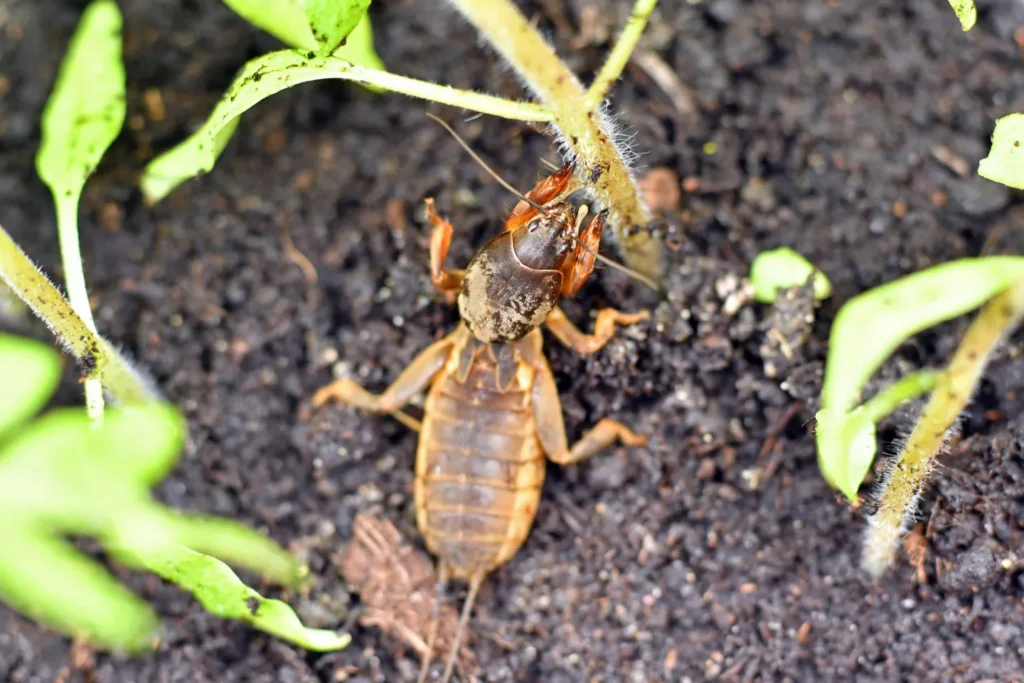
What most people would consider to be common garden pests are the only confirmed insects to construct their own amplifier. What impressive knowledge that God gave this unassuming insect!
Once a female tracks down the ideal song and mates, she will start digging her own unique burrow. The tunnel will be just deep enough to maintain the perfect environment for brooding her eggs. She will leave immediately after laying, never to return, and after several months, the 25–60 capsular eggs will hatch. Since mole crickets undergo incomplete metamorphosis, the babies will appear as miniature versions of the adults, growing larger every month through molting. By the next spring, the young will be fully grown, ready to begin the cycle once more.
Many will search out large lawns with tasty roots, where they will serve important roles in their Creator’s ecosystems—aerating the soil and attracting other helpful animals like birds and toads. So as the weather warms up, keep a lookout for these odd, complex, and even adorable creatures.
Written by Maeven Winstead